


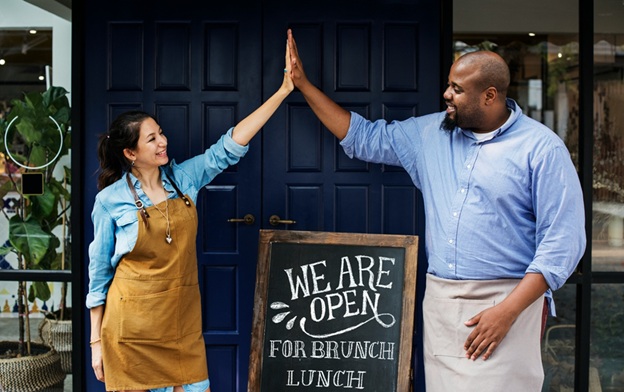
In nearly every conversation I have with small business owners, whether they’re running a local shop or launching something new out of their living room, there’s a surprising undercurrent they all share: Optimism.
This may sound surprising amid current economic uncertainty, but when I talk to founders, I hear a belief that growth is still possible even if the path looks different than it did a few years ago.
LinkedIn’s Small Business Work Change Report confirms what many leaders are already feeling. Across industries, small business owners remain optimistic about the future. But what’s most interesting to me is that they are turning optimism from a feeling to a strategy. For them, success isn’t defined by size or scale, but by mindset, adaptability, and access to the right tools, skills, and networks. When I talk with entrepreneurs like Liam Darmody, I’m struck by how deliberately they think about growth. He shared that investing in professional tools is an investment in himself, a way to create opportunity, expand relationships, and keep moving forward despite uncertainty.
This is what I think of as the Optimism Economy: A new wave of growth driven by founders who believe forward momentum is possible and are willing to act on that belief.
A New Generation Is Leading with Confidence
Optimism is especially prevalent among a new generation of entrepreneurs. More than half (57%) of Gen Z owners are going into business for themselves by embracing technology, building authentic brands, and leaning into community as a core growth strategy.
What surprised me most was how intentional young founders are about connection. Gen Zers are building businesses that are digitally savvy but deeply human. They’re asking better questions, experimenting earlier, and showing up visibly even before they feel “ready.”
Together, they’re shaping an economy of optimism where confidence fuels action, and action creates opportunity.
From our data and countless conversations with founders, three distinct pillars consistently stand out as drivers of this shift—AI, networks, and branding—each providing small businesses with a clear path to turn their optimism into tangible growth in the year ahead.
AI as a Growth Accelerator, Not a Replacement
Generative AI is no longer a future consideration for small businesses. It’s a present-day advantage. More than half of U.S. small business leaders say AI is key to growing their business, and 73% of small business marketers globally believe AI helps smaller brands compete and “punch above their weight.”
When founders ask me where to start with AI, I don’t tell them to “transform their business.” I tell them to pick one task they dread and automate that first. That might mean drafting a first pass of customer outreach, turning rough ideas into marketing copy, or speeding up hiring workflows. Small wins build confidence.
For small business owners, AI isn’t replacing people. Its value comes from freeing up time by automating repetitive work, from drafting outreach to managing hiring workflows, and making marketing more efficient to reach the right audiences faster. Building AI literacy gives entrepreneurs the confidence to experiment and adapt as tools evolve, especially when those capabilities are integrated into familiar, trusted platforms like LinkedIn, where much of the work already happens.
In conversations with leaders like Bhavika Patel, I consistently hear the same theme: AI works best when it strengthens human judgment. She’s described how it helps her accelerate business development, keep pace with AI trends, and make faster, more informed decisions without losing the human element.
Networks as a Competitive Advantage in an AI World
As technology becomes more powerful, it’s becoming more and more clear that human connection matters more than ever.
LinkedIn data shows that 78% of small business leaders say building their professional network is important for business growth, while nearly two-thirds say trusted input from their community helps them make decisions more quickly and confidently. Even in an AI-driven economy, 73% of small business leaders agree that human connection is critical.
What I see consistently is that optimistic founders don’t grow alone. They grow through other people.
The most successful founders I meet aren’t the loudest voices in their networks; rather, they share lessons learned, ask for advice, and show up consistently, even when there’s no immediate payoff.
Professional networks today serve multiple roles at once: a source of customers, partners, mentors, and real-time insights. For many small businesses, connections are the fastest path to opportunity, with 41% of leaders saying their networks are most valuable for finding new customers.
Branding Through Authenticity and Credibility
Brand building has become a top priority for small businesses (and for good reason).
According to LinkedIn’s research, 76% of small business leaders say building their brand and reputation is key to achieving their goals, and 64% believe an online presence helps them stand out against competitors. Brand and reputation building now rank as the top priority for small business leaders heading into 2026, even ahead of strengthening customer relationships.
I believe the strongest small business brands right now are built by founders who are willing to show up consistently as themselves. Nearly 75% of small business leaders agree that showing up authentically online is just as important as doing so in person, and 65% now consider themselves content creators. Video, in particular, is becoming a powerful way for founders to tell their story, share expertise, and build trust at scale in a way that feels personal, not perfect.
Looking Ahead: Thriving Through Change
As we look toward 2026, one message stands out clearly from the data: Small businesses are not retreating in the face of uncertainty. In fact, they’re advancing with optimism.
After spending years watching entrepreneurs navigate change, I’m convinced that a new generation of small business leaders is redefining resilience by combining technology with humanity, branding with authenticity, and networks with purpose. They’re proving that success doesn’t require massive scale, but it does need belief, adaptability, and the willingness to show up.
The Optimism Economy is about meeting them with confidence, connection, and creativity. And small businesses are leading the way.
Judy Nam is a business leader dedicated to helping small businesses build clarity, resilience, and long-term momentum. With 20+ years of experience across technology, product, and operations, she has spent her career translating complex tools and ideas into practical solutions that actually work for founders and small teams. Her work has consistently focused on the real needs of small businesses, from hiring and customer acquisition to scaling sustainably without losing focus.
Photo courtesy Curated Lifestyle for Unsplash+