


Artificial intelligence is often seen as a tool that will favor large enterprises with massive data sets and big budgets. But that may not be the case. In fact, small businesses—unburdened by years of outdated systems and scattered information—may be better positioned to benefit from AI, if they can get organized.
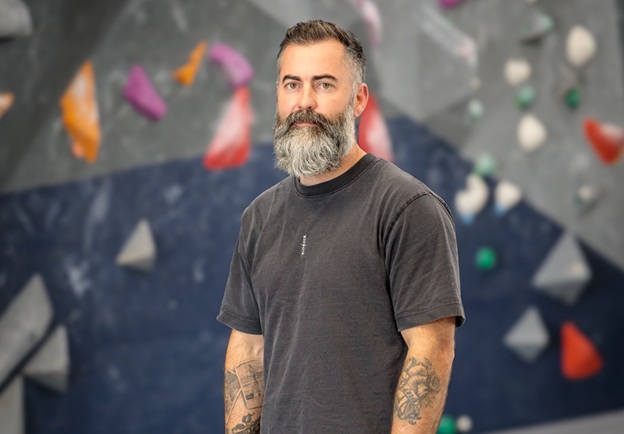
To learn more, I turned to Neal Mann, Wall Street Journal journalist-turned AI technologist and CEO of NOAN, an AI-knowledge system that Mann calls “your superhuman business partner.” We discussed why small businesses could have an AI edge—and what it takes to make AI actually work.
Rieva Lesonsky: You’ve had a fascinating career—from journalism at the Wall Street Journal to building an AI company. What drew you to the intersection of knowledge systems and artificial intelligence?
Neal Mann: I’ve definitely been on a bit of a journey with my career, but there is quite a through line across it. When I initially worked in journalism, I was one of the younger journalists who understood the impact of social media on the sector, pushed for a change in the way we communicate with the audience, and then saw the impact that ultimately [reshaped] business models. This then led me into the world of corporate transformation and shifting the way we think about building products.
Over the past 15 years, I’ve worked with some of the biggest brands in the world at the C-suite level, alongside their teams, on how they think about transforming their products, experiences, and operations. It was in this space that I recognized the one problem that goes across all businesses, big and small. They’re a complete mess of business knowledge.
It’s fascinating, really, when you consider it—everybody’s working with very archaic processes. These companies are built on this stack of what is essentially a paper-based process, even though AI, which is a knowledge-referencing and knowledge-prediction machine, ultimately needs high-quality information.
But it also needs a single source of truth. There can’t be two variations, otherwise AI doesn’t know which is true. So, I saw an opportunity to just rethink what a business is from the ground up in the most first-principles fashion. I could see that to rethink how companies work with AI, we actually just need to rethink how they operate and consider what a business is at its core.
Ultimately, in the AI world, a business is its context. And within that context, it’s really important that you look at what that single source of truth is built on. It needs to be built on facts. In many ways, my career has been a journey from understanding facts in the journalism world, all the way through to understanding them in the corporate environment, and now enabling anybody to build their business on a facts layer that gets them accurate AI, and keeps their team and AI working together from the same source of truth.
Lesonsky: Many people assume AI will primarily benefit large enterprises with big budgets and massive data sets. But you argue that small and midsize businesses may actually have an advantage. Why?
Mann: The assumption that large enterprises will primarily benefit from AI is wrong in my view. I think large enterprises will actually fail for all the reasons we’ve talked about. They’re a complete mess; it’s very hard for them to reset. If you’ve ever worked, as I have, in the transformation space with global enterprises, it’s like trying to turn around a tanker.
It’s important to understand how many departments they have, how many people, how many people are ignoring the actual processes they should be doing, how processes have organically developed over time, and nobody quite knows why, but they’re still following them.
So, the problem here is that if you’re an enterprise, your data is largely worthless because it’s very hard to leverage. You have no single source of truth, and it’s almost impossible to reset how the business works. Whereas if you’re a startup or an SMB, you can reset much, much more easily because you probably have a smaller team and have more control.
As a result, I believe it will be the smaller companies that benefit the most from AI, because they can make the right decisions to actually reset how they operate and work.
Lesonsky: In contrast, small businesses have the opportunity to build what you call AI-native knowledge systems from the start. What does that mean in practice?
Mann: There’s no doubt that smaller businesses are in a much better place.
A good way to think about what an AI-native knowledge system is from the start is to think about how you traditionally view your company as your brand, your products, your people, and your culture. But in the AI age, the reality is that your business is the context AI references.
So, for example, take your brand positioning or your pricing, bits of context your AI will leverage to deliver communications or deliver answers to your customer base. To be truly AI-native, the first thing you need to do is actually make that context central to your company.
As you start doing this, you quickly see that you don’t use things like documents. As a company, we’ve only used legal contracts as documents in the past six months. Everything else has been deployed from our own platform. I believe the real marker of an AI-native business in the future is that it will not use any documents whatsoever. Documents are just a way to transfer information, and there are many more effective ways to do so if you make context and knowledge central to your business.
Lesonsky: For small business owners who feel overwhelmed by AI, where should they begin? What are the first steps to organizing their company’s knowledge so that it works effectively with AI tools?
Mann: Imagine your company is made up of Lego bricks. Each Lego represents a fact from your business, such as your brand positioning, mission and vision, pricing, and product features. You then add the context to each of these, so that your knowledge is structured.
There’s a big misconception that AI is great at making sense of unstructured data, when actually the opposite is true. If you want to build a single source of truth, you need really structured data. Platforms like NOAN make this really easy. As soon as you join, you can add your website URL, and it will extract all the facts from your business and get you started.
Then you can add more from there. The key, though, for whatever you need to do, is to realize that these facts are ultimately what you need to keep up to date on. They should be the live state of your business. It’s a slight mental shift from thinking of AI as a tool for referencing documents to realizing you’re actually using Lego bricks of information to power what AI knows about your company.
Lesonsky: Looking ahead three to five years, what do you think will separate the small businesses that successfully harness AI from those that fall behind?
Mann: The big thing that will separate them will be those who put AI and knowledge central to their businesses. There’s no doubt in my mind. We’re seeing that already. If you want to be successful as a small business owner, you need to rethink what your company is and get organized. It’s one of the toughest things for small business owners to do, but you need to look at everything you’re doing and start thinking about how to break this up into information that AI can reference.
And then, most importantly, choose to work through platforms where you can actually use that context and knowledge to power AI.
Rieva Lesonsky is the founder of Small Business Currents, a content company focusing on small businesses and entrepreneurship. You can find her on Twitter @Rieva, Bluesky @Rieva.bsky.social, and LinkedIn. Or email her at Rieva@SmallBusinessCurrents.com.