


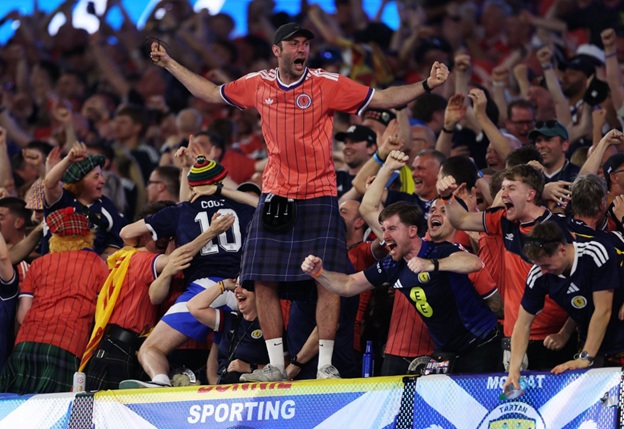
The World Cup is in its second week, and 1.24 million international visitors are expected to descend on U.S. host cities (Los Angeles, New York/New Jersey, Dallas, Atlanta, Seattle, Miami, Houston, Philadelphia, Kansas City, and Boston) during the tournament. Small businesses in these host cities are already facing increased consumer demand.
The World Cup Effect
Luckily, according to new data just published by Gusto, savvy small business owners were ahead of the game. Guston’s stats show that food service, entertainment, and construction businesses in stadium neighborhoods picked up the pace of hiring in May 2026, even as hiring in those same sectors softened nationally.
Gusto’s economists found that the pattern is consistent across host cities:
- Entertainment and recreation net hiring near stadiums rose by an average of 14.6%, compared to a 3.8% decline across host-city metros overall.
- Food and beverage net hiring near stadiums is up an average of 3.5%, compared to a 1.3% decline metro-wide.
- Construction net hiring near stadiums is up an average of 3.8%, compared with a 1.4% decline across host-city metros.
- Philadelphia and Seattle led on entertainment hiring, both posting increases of more than 40% compared to May 2025.
- New York City led in food and beverage and construction, with the stadium neighborhood seeing food and beverage hiring up 18 percentage points and construction hiring up 15 percentage points.
The Gusto data suggests this wasn’t just a May phenomenon. Gusto says it observed elevated hiring trends in these neighborhoods in March and April 2026, suggesting that small businesses were staffing up well ahead of kickoff.
The Knicks Turn Basketball Into Big Business for Small Business
Soccer is not the only sport that generated tons of money for small businesses this spring. The New York Knicks’ breathtaking (sorry, I am a native New Yorker) 2026 postseason run, culminating in winning the NBA Championship, generated $202 million in local economic activity through the first three playoff rounds alone, with the total impact projected to reach $465 million, according to NYC Mayor Zohran Mamdani and the New York City Economic Development Corporation (NYCEDC).
Some specifics:
- com reports that financial data showed popular New York bars and restaurants averaged $1,000 more in revenue on every single night the Knicks played, leading to “an immediate 6.7% baseline revenue jump across city eateries compared to non-game nights.”
- Venues closer to the Knicks’ home arena, Madison Square Garden, and other designated “watch locations,” such as Central Park, Williamsburg in Brooklyn, the West Village, and Bryant Park, “experienced massive 50% spikes in nightly revenue during the peak of the Finals.”
- The NYCEDC says “every single home game hosted at the Garden injected roughly $90 million into the local economy.”
- The local watch parties and the flood of tourists and visitors “boosted shifts and tip earnings for over 440,000 hospitality workers, driving rapid “induced spending” back into local neighborhoods.
The Taylor Swift Economy
There are several major sporting events that occur nationwide every year (Super Bowl, World Series, Stanley Cup Championship, NCAA playoffs, major golf tournaments, the U.S. Open Tennis Championships, the Kentucky Derby, etc.) And the Olympics are coming to Los Angeles in the summer of 2028.
But sports aren’t the only spectacle that can enrich a city.
According to Forbes and reported by Variety, Taylor Swift just became the “richest female musician in history, with a net worth of $2 billion.” But Swift spreads the wealth. Her Eras Tour (2023-2024) is the highest-grossing concert tour ever, and “injected nearly $5 billion into the U.S. GDP and had up to $7 billion in total retail economic impact across North America.”
The Tour not only generated revenue in every city it visited but also created thousands of short-term jobs and boosted revenue for local small businesses. It had an economic impact of $320 million in Los Angeles alone. In New Orleans, Eras sparked a 31% rise in Lyft rides.
How Small Businesses Can Join the Surge
Small business owners don’t need a World Cup match, an NBA championship, or a Taylor Swift concert in their backyard to benefit from major events. The lesson is to think ahead. Businesses in World Cup host cities began hiring months before kickoff because they anticipated demand. Whether it’s a local festival, a major convention, a college football game, a concert series, or a community celebration, opportunities often go to the businesses that prepare first.
The most successful small businesses look beyond the event itself. They find ways to attract new customers, create memorable experiences, and build relationships that last long after the crowds go home. A surge in visitors may provide a short-term boost, but turning those visitors into repeat customers can create long-term growth.
The real lesson isn’t that big events make money.
Everybody knows that.
The lesson is that smart business owners prepare before the crowds arrive.
And that’s what Gusto’s hiring data proves.
Rieva Lesonsky is the founder of Small Business Currents, a content company focusing on small businesses and entrepreneurship. You can find her on Twitter @Rieva, Bluesky @Rieva.bsky.social, and LinkedIn. Or email her at Rieva@SmallBusinessCurrents.com.
Photo courtesy FIFA